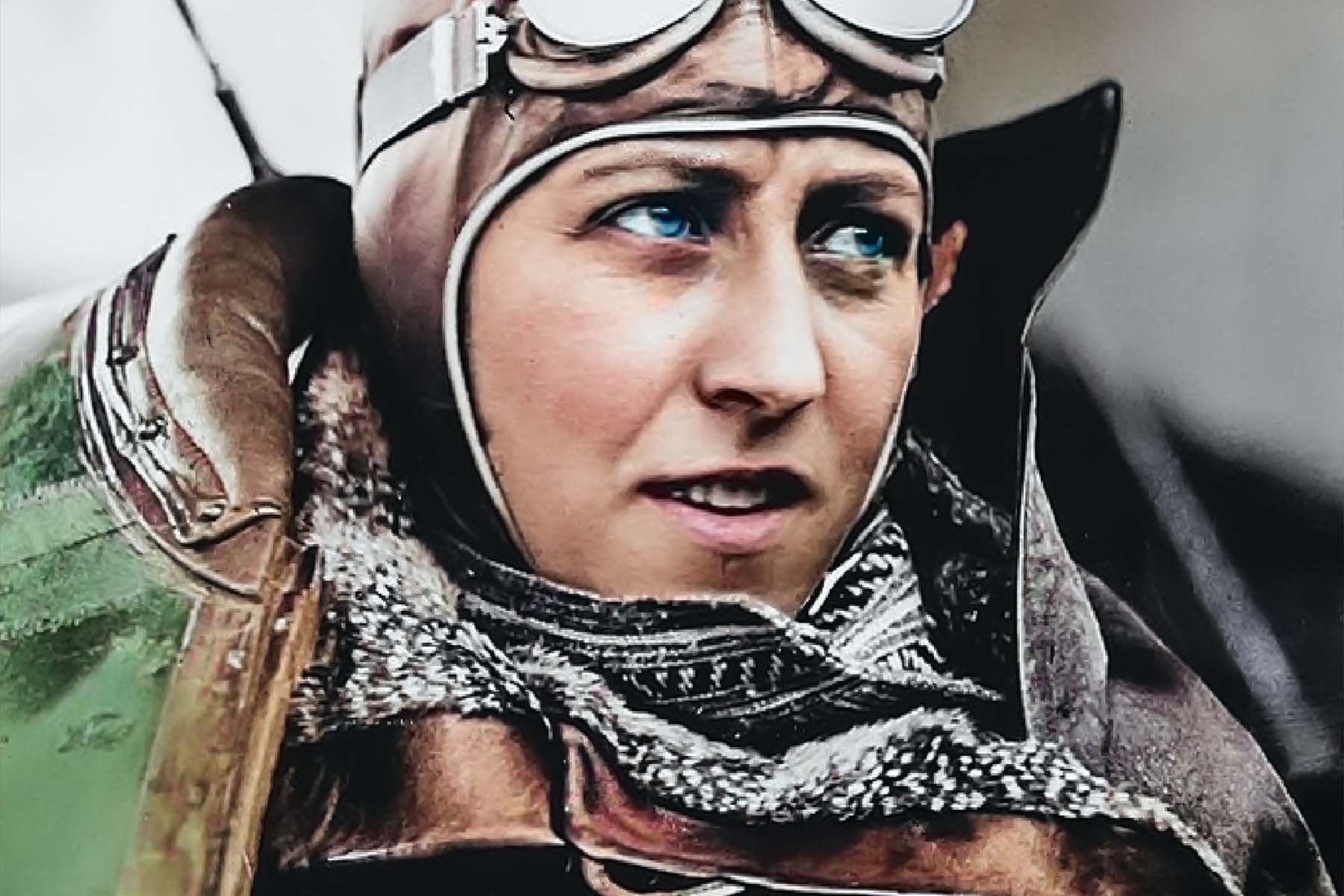
Amy Johnson
Written by Jane Delamaine
The year 1903 saw two significant dates in the history of aviation. On 17th December 1903, Wilber and Orville Wright achieved the first powered flight in a heavier-than-air machine at Kitty Hawk, North Carolina, USA. Five months prior to this, on 1st July 1903 a child was born to John William and Amy (Ciss) Johnson; the baby was a girl named after her mother. Young Amy grew up in Hull, and was a tomboy with a passion for sport. From a young age Amy was different, she was not afraid to challenge life and in her own words ‘led many a strike and rebellion’. In 1925 she obtained a degree in economics at Sheffield University and went on to various office jobs, all of which failed to satisfy her restless spirit.
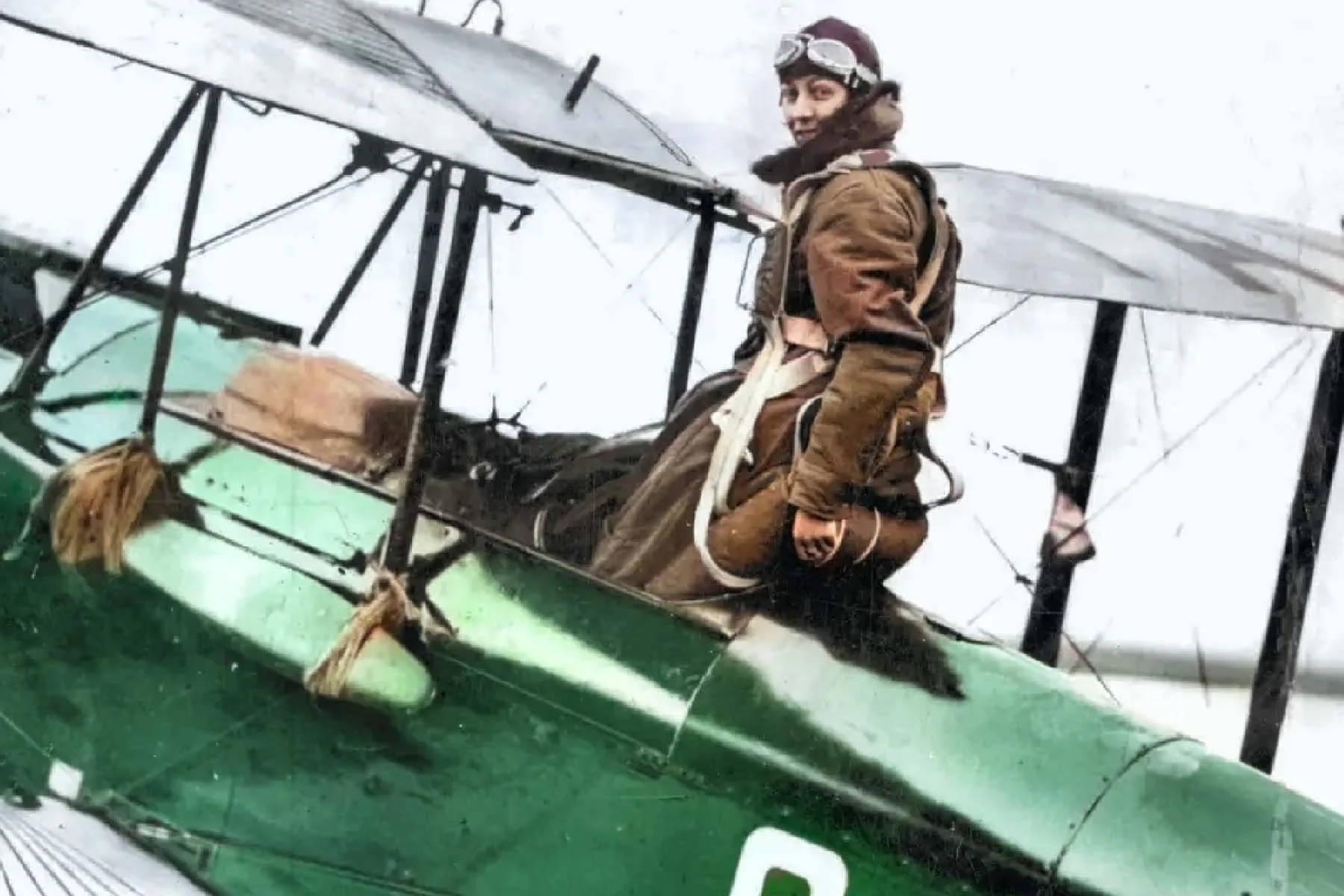
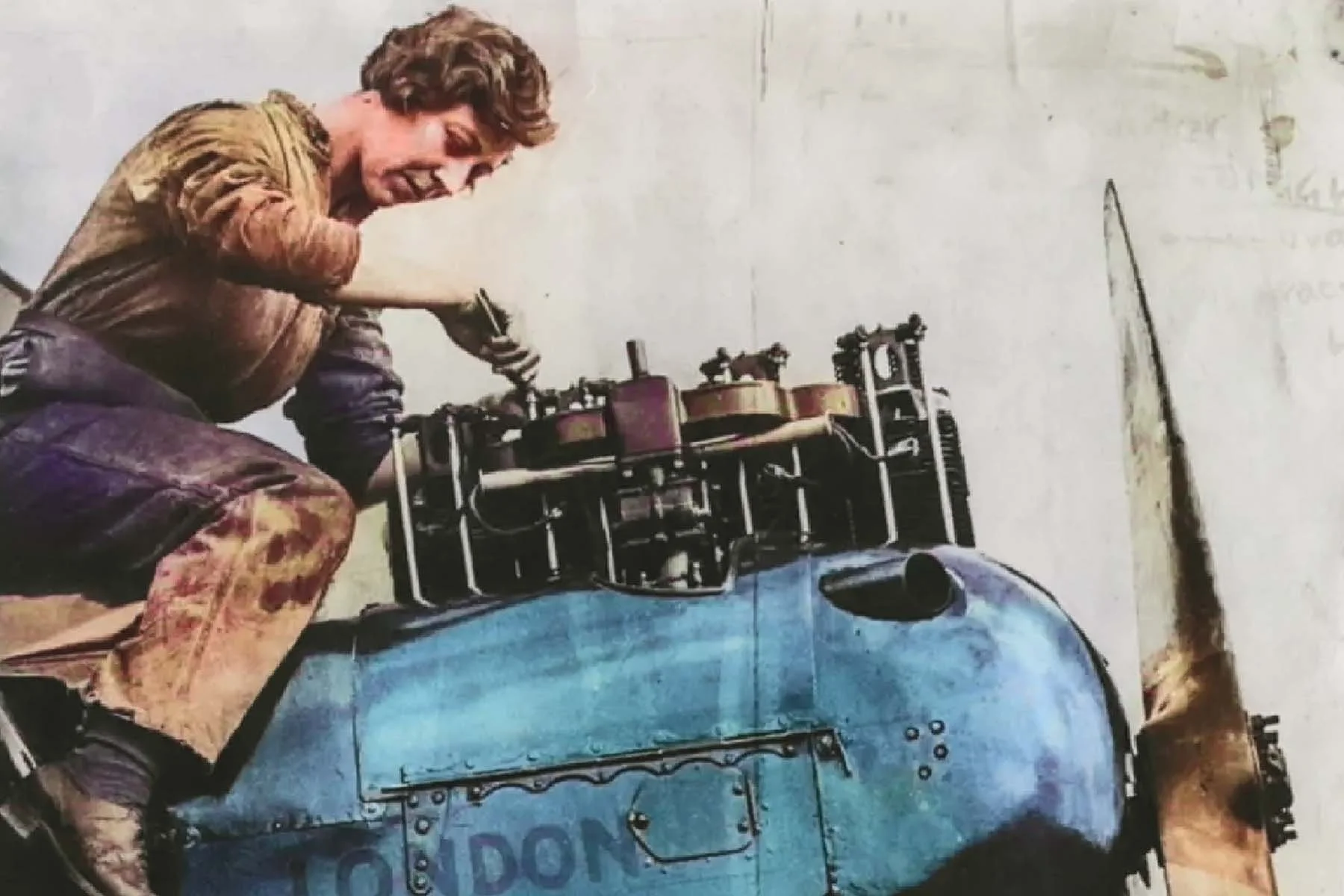
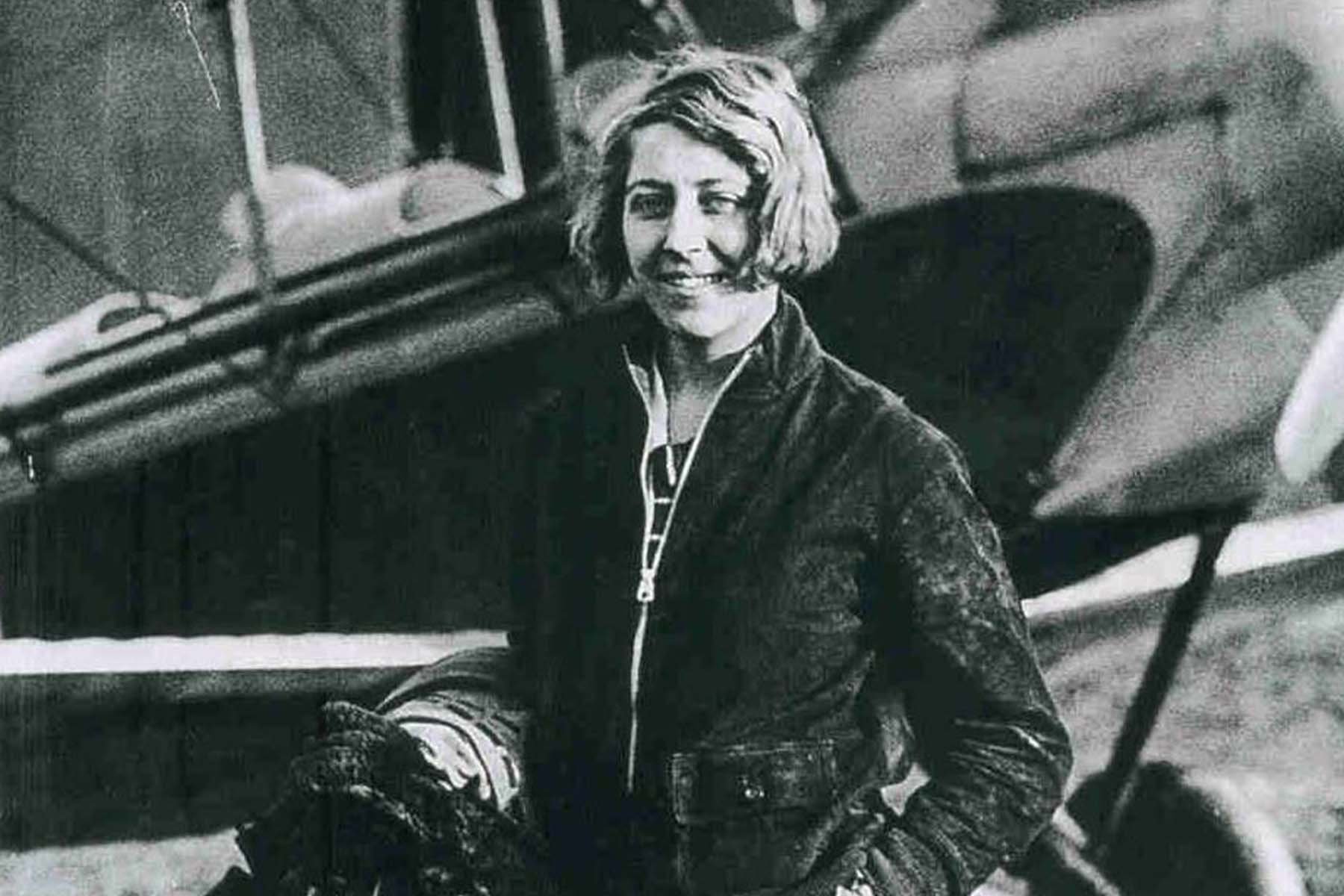
In 1927, Amy moved to London seeking adventure, securing a job as a typist to pay the bills; she then looked to the skies for escape. Inspired by the romance of flying, Amy decided to learn to fly and took her first lesson in 1928 at Stag Lane Aerodrome in Edgware, north London, obtaining her pilot’s ‘A’ licence on 6th July 1929. Amy was interested not only in flying but in engineering, and despite institutional misogyny she became the first British female ground engineer on 10th December 1929; at one point the only one in the world. Office work failed to keep Amy’s interest and flying and engineering became her obsession. She believed in the future of aviation - what they called in the 20s ‘air mindedness’ - and decided to prove to the world the importance of aviation by flying solo from England to Australia; a trip only attempted by experienced male pilots.
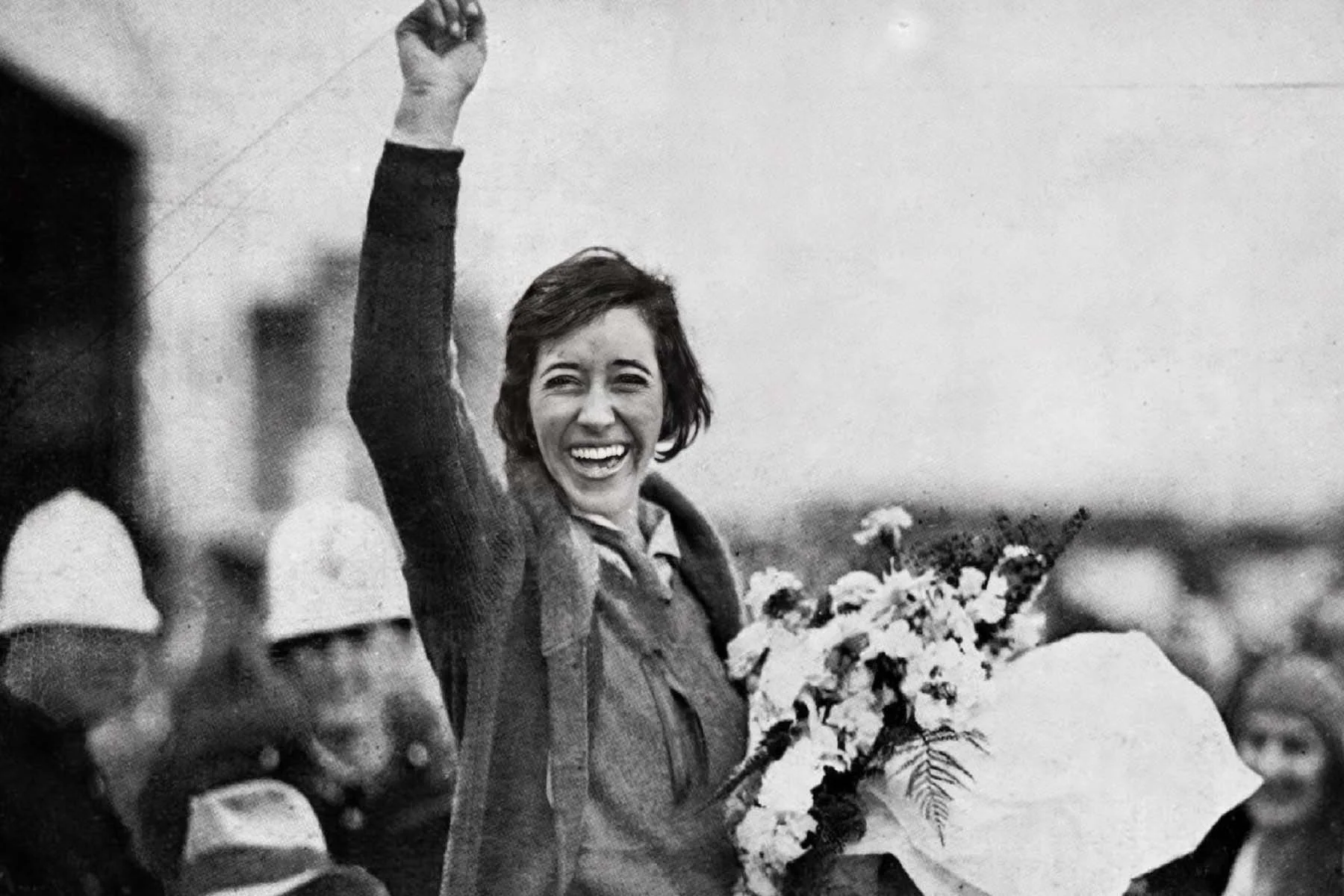
At the age of 26, Amy Johnson took off from Croydon Airport on 5th May 1930 in an open cockpit biplane she named ‘Jason’. At this point she had held her pilots’ licence for only ten months and the furthest she had flown was London to Hull; the trip amounted to little less than suicide. The journey was far from smooth, as Amy struggled with crashes, basic equipment, the fragile structure of the aircraft, gruelling conditions and extreme exhaustion. But against the odds, on 24th May 1930 Amy Johnson landed in Darwin Australia setting the record for the first woman to fly solo from England to Australia, and the world fell in love with this ordinary woman who had achieved an extraordinary feat. The ‘flying typist’ inspired a whole generation proving the impossible to be possible, and challenging contemporary misogynistic conventions; Amy Johnson was the influencer of her time. The flight was made possible by the investment of one man, Lord Wakefield, who turned Amy’s dream into a reality:
The magnificent feat of that English girl is one which stirs the imagination, not only of women, but of men in every country in the world. Every nation, I am certain, will join in paying tribute to what is undoubtedly a most extraordinary exhibition of courage and endurance on the part of a girl who so light-heartedly set out from London fewer than twenty days ago on one of the most hazardous expeditions anyone could attempt (Dixon 1930:89).
Amy spent the rest of the 1930s breaking more aviation records and promoting women in aviation and engineering, completing her last record-breaking flight in 1936. When war came, the only flying role open to her was to join the Air Transport Auxiliary (ATA), a civilian organisation attached to the Royal Air Force (RAF) tasked with transporting aircraft from the factories where they were built to the airfields where the men took them into battle. On 5 January 1941, on what appears to be a routine flight, Amy took off in bad weather in an Airspeed Oxford from RAF Squires Gate heading for Kidlington, Oxfordshire; she never arrived. Four hours after take off, a convoy of 35 wartime vessels in the Thames Estuary off Herne Bay, Kent spotted an aircraft come through the clouds and hit the water. A dramatic rescue attempt failed to save the pilot, seen alive in the water, and also claimed the life of the captain of the vessel who went to their aid. A small boat was sent to scan the area for bodies or survivors, finding two bags which contained the belongings of Amy Johnson. In December 1943 a ‘proof of death’ case concluded the pilot in the water that day was Amy Johnson. History writes that Amy took off in bad weather, got lost, ran out of fuel, bailed out and drowned. Many questions remain unanswered but it is now widely accepted that Amy was hit by the propellor of the vessel that tried to save her; her body and the wreckage of her aircraft were never found. She was 37 years old.